
Virtual Humanities Conference – Day 3
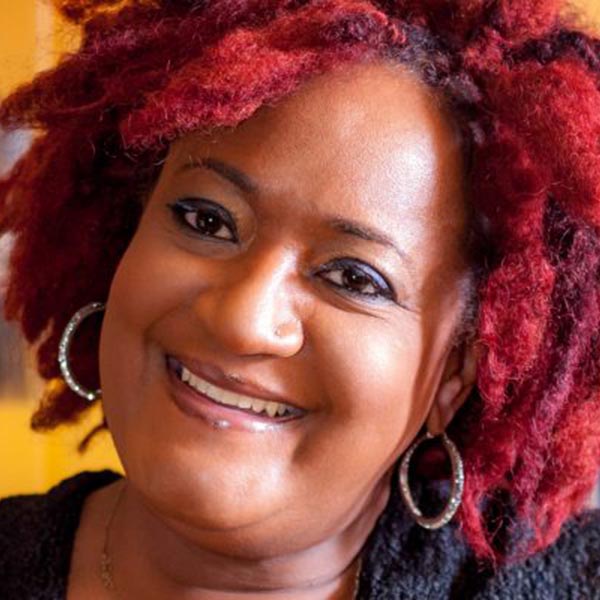
Psyche Williams-Forson
University of Maryland College Park
Beautifully Human and Very Complicated: Telling Stories of Food and Race
Dr. Psyche Williams-Forson is Professor and Chair of the Department of American Studies at the University of Maryland College Park. She examines the lives of African Americans living in the United States from the late 19th century to the present. In addition to several journal articles and book chapters, her work on material culture and food has been published in her books, Taking Food Public: Redefining Foodways in a Changing World and the award-winning Building Houses Out of Chicken Legs: Black Women, Food, & Power. Her new book, Eating While Black: Food Shaming and Race in America is forthcoming in spring 2022.
Queers Saving the Planetary Ecosystem: A Short History of Earthworms
Yvette Abrahams holds a PhD in economic history from UCT, and has consulted for decades for NGOs and government. A former Commissioner for Gender quality, she steered programmes on poverty, energy and climate change. Dr Abrahams has also been an active academic, and has worked as a lecturer and researcher both in South Africa and the United states. She has published widely, with her best-known work being studies of Sara Baartman, research on lesbians and queer theory/politics and writings on gender and climate change. Dr Abrahams was one of the first feminists to address gender, feminism and climate change in South Africa. She has also been an organic farmer for several years, and currently runs a small business on her smallholding just outside Cape Town for producing carbo-neutral organic soap and body products.
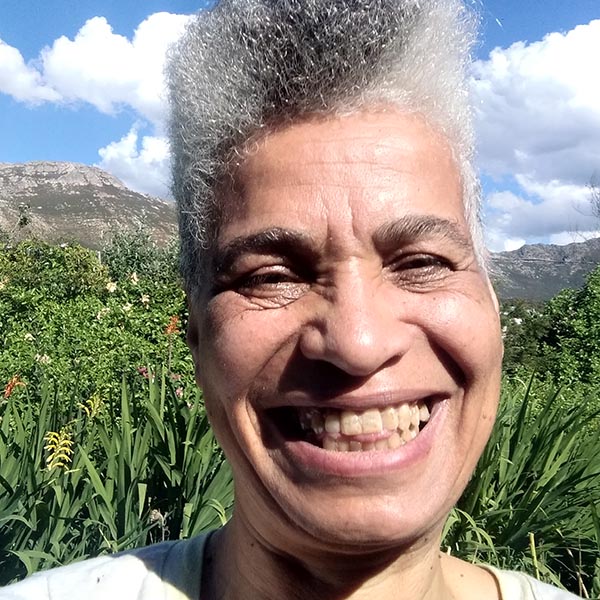
Dr Yvette Abrahams
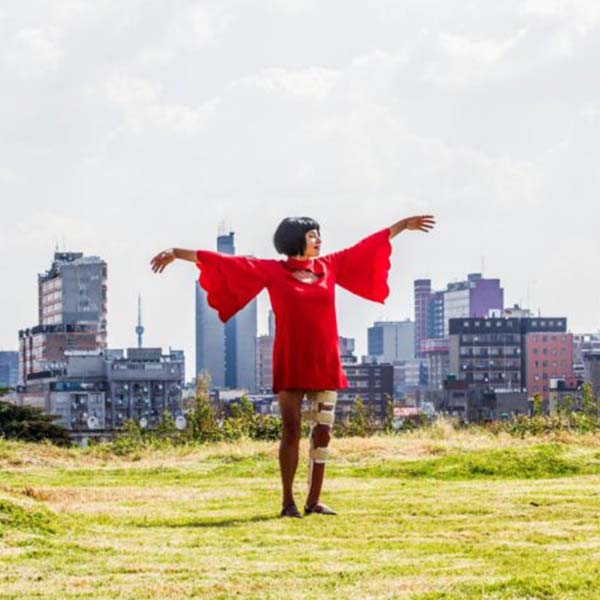
Shelley Barry
University of Johannesburg
Food. Film. Home: A Filmmaker Reflects
Shelley Barry is one of South Africa’s most innovative documentary film-makers, the winner of numerous awards and has had her films screened at festivals around the world. Currently a lecturer in documentary and experimental film and national cinema at the University of Johannesburg, she is also the director of her own company Twospinningwheels. Shelley Barry is well-known for her trilogy, Whole a Trinity of Being(2005), Diaries of a Dissident Poet (2014) and Here (2019). Barry’s films are distinctive in focusing on what is usually not seen or thought about. Food and eating – within human beings complex lives – is one example of this. This session will involve a screening of aspects of Barry’s work focusing on food, and will be followed by discussion.
Panel 13: Food and identity-formation
Session Chair: Heather Thuynsma
Black gay men’s status consumption of food as a construction of identities in South Africa: A literature review (2000-2020)
Brian Sibeko
Black gay men’s status consumption of food as a construction of identities in South Africa: a literature review (2000-2020)
Presenter: Brian Sibeko
Available literature indicates that the desire to seek and signal one’s prestige and status in society is notable, especially for people who belong to or identify with a marginalised, stigmatised, or low-status group. Notably, these groups engage in status consumption to affirm and enhance their identity in society. This is especially the case for Black gay men who continue to be discriminated, marginalised, and oppressed in society. Predicted on the social identity theory, this study conducted a systematic literature review which was guided by the PRISM Framework to address the following research question: What is the nature of South African Black gay men’s status consumption of food in the context of identity construction? The inclusionary criteria of this study yielded 121 qualitative and quantitative studies which were conducted across the world between the year 2000 and 2020. The findings from the literature that was included in this systematic literature review affirm that gay men are status-conscious consumers who engage in status consumption to construct their identities. The literature also suggests that they engage in this consumption habit to build a positive social identity and consequently counter the homophobia they experience in society. However, these findings also indicate a need for more research that will explore this consumption habit in the context of food since existing studies on the status consumption of food focused on the general population without giving any attention to how gay men, particularly Black gay men, engage in the status consumption of food to construct and maintain their identities. Of the studies that focused on gay consumption, none has focused on food. Rather, their focus is on gay people’s status consumption of luxury products such as cars, leisure travel, branded clothing, and gadgets.
Narratives of Identity and Belonging: Place and the everyday food practices of immigrant, Muslim, women living in Fordsburg, Johannesburg
Safia Bobat
Food consumption practices and social identity construction in South African soapies: A semiotic remediation discourse analysis of Skeem Saam
Nokukhanya P. Ndlovu
Narratives of Identity and Belonging: Place and the everyday food practices of immigrant, Muslim, women living in Fordsburg, Johannesburg
Safia Bobat
Narratives of Identity and Belonging: Place and the everyday food practices of immigrant, Muslim, women living in Fordsburg, Johannesburg
Presenter: Safia Bobat
Food and food practices are used as a lens to access the narratives of identity constructed by Muslim, immigrant women living in Fordsburg, a space renowned for its many eating places and street food culture. Fordsburg, affectionately known as ‘Foodsburg’ to locals, has played host to many diverse communities in its history and has been visibly influenced by these communities. The reciprocal impact of person on place and place on person is highlighted through the purposeful selection of Fordsburg as a geographic site of enquiry. A series of interviews have been conducted and a number of photographs taken by participants of food and food shops in Fordsburg have been
collected. Some of this material will be presented in connection with the theme of eating and food buying practices in relation to identity-construction.
Food consumption practices and social identity construction in South African soapies: A semiotic remediation discourse analysis of Skeem Saam
Nokukhanya P. Ndlovu
Food consumption practices and social identity construction in South African soapies: A semiotic remediation discourse analysis of Skeem Saam
Presenters: Nokukhanya P. Ndlovu
Soap operas are multifunctional resources, they serve as entertainment, representation of the society and somewhat educate the society. Through the soap operas the lived experiences of people are told, and the viewers are enlightened of the narratives of people. However, at the same time soap operas enhance or influence and somehow challenge the perspectives of the audience in relation to identity and identity performance. Storytelling involves telling or rather portraying the lived experiences of people. Furthermore, the soap operas are a representation of the society. In other words, lived experiences are reacted and repurposed and mirror the reality. Thus, this study focuses on Skeem Saam, a South African soap opera aiming to reveal the kind of food related semiotics that are compiled in recreating the social identities and life of the South African society and the implications of such performances to the broader society and food consumption practices. It will use the qualitative method for an interpretive analysis and aims to answer the research questions using the semiotic remediation discourse analysis as the theoretical framework.
Panel 14: Food and identity-formation
Session Chair: Relebohile Moletsane
The edible woman: Ethnolinguistic reflections on names of Kiganda food
Sarah Nakijoba
Food and Gender Relations in a Muslim inner-city in Accra, Ghana since the 1980s
Presenter: Charles Prempeh
In Luganda, there are certain linguistic expressions used in reference to food types but which metaphorically portray a woman as an edible entity. For example, the form mboona literally describes a healthy and yellow-ripe mango, but it has been semantically broadened to refer to a
girl or a (young) woman with a glow of beauty that is irresistibly attractive. Preliminary findings indicate that many of these expressions are gender sensitive, and as such, feminine forms such as mboona cannot be processed in reference to a boy (young) man with similar attributes. Using Luganda spoken conversations which were obtained from conversational interviews and focus group discussions in 2020, the study interrogates the gender-based relationship between food and body image. It analyses the pragmatics of a selected sample of food names and descriptions used in reference to women with the aim of unearthing their underlying inferential interpretations. In addition, the study attempts to explain the role of language in creating emotional awareness on the value of food and how this converts into people’s urge to preserve food and lessen the dangers of its extinction. The analysis will be informed by Sperber and Wilson’s (1995) relevance-theoretic
notion of inferential processing.
If Meat be the Food of Love, Play on: An Appraisal of the Assamese Movie ‘Aamis’
Aparna Ajith
If Meat be the Food of Love, Play on: An Appraisal of the Assamese Movie ‘Aamis’
Presenter: Aparna Ajith
Cinema plays a quintessential role in the daily life of an ordinary human being. Film as a multi-dimensional medium, with great potential to inform and educate has extensive power to play with
a man’s psychology. Being the cultural artifact of human life, it has carved a niche of its own by depicting the eternal verities which are universal in nature. It has become the rich heritage of man and we see the recordation of the heartbeats of the entire human race in celluloid form. The paper endeavors to give a glimpse of the rare emotional connection over food between an unusual pair, separated by age and morality, through the movie ‘Aamis’ (Ravening) released in 2019. This Indian Assamese-language feature film by the national award-winning director, Bhaskar Hazarika narrates the story of a married paediatrician cum mother who develops an unusual bond with a younger Anthropology student doing Ph.D. in the meat-eating traditions of north-east India. The characters, Dr. Nirmali Saikia and Sumon Baruah meet quite accidentally and incidentally but their platonic love flourishes within no time for their insatiable appetite for meat. They are consumed by the love for food and they are united by their love for the forbidden. They have not even touched each other by mistake and all their conversations revolve in, around, and within the exuberances of food items
especially meat dishes. Their meat attachment goes beyond the definition of blind love and they share a piece of each other to connect to each other. ‘Aamis’ in the Assamese language alludes to meat and here, it acts as a metaphor for non-veg, sex, and lovemaking. Although Nirmali is a married woman and Sumon is a young research scholar, they go for the forbidden in the pool of
glowing love. The dreadful and bizarre turn in ‘Aamis’ makes one feel that all is fair in the love for food that transmutes all manmade entanglements.
Mass and Social Media, Food and Navigating “Being Black and Middle Class” in South Africa
Pamella Gysman
Mass and Social Media, Food and Navigating “Being Black and Middle Class” in South Africa
Presenter: Pamella Gysman
One of the most visible aspects of democracy in South Africa is the black middle class. Its tastes and consumption patterns have been of long interest to both media and researchers; with prevailing perceptions portraying a vapid, shallow and materialist group obsessed with status. Based on a phenomenological exploration of black middle class’ negotiation of “self” and identity, insights into food and black middle-class identity making on television or in the print media are revealing, and such insights are even richer in social media. By discussing a variety of media communication, especially social media, this paper reflects on how members of the black middle-class have used food narratives and messages about taste culinary skill or food knowledge to craft empowering self-images in the face of deeply embedded racism in the South African culinary scape. By focusing on patterns such as “eating without food”, “the cultured palate” (my terms) as well as encoding and decoding, I draw attention to the complex ways in which black subjects navigate classed and racialised words. By developing what seem to be unremarkable performative
acts related to eating, preparing and displaying food. Black subjects create “selves” that reveal ingenuity and thoughtful knowledge about food, taste as well as the violent history underlying the evolution of South Africa’s food cultures.
Panel 15: Food in/and social history
Session Chair: Marshall Maposa
Rhizome Networks: Turmeric’s journey from Haldi Doodh to Turmeric Latte
G. Paleker
Rhizome networks: Turmeric’s journey from Haldi Doodh to Turmeric Latte
Presenter: G. Paleker
Turmeric has a long history of use in South and Southeast Asia going back thousands of years. It’s first known reference is found in the Atharva Veda, one of the four Vedic texts of Hinduism. In Sanskrit alone it has over fifty synonyms based on its use in cuisine, cosmetics, folk medicine, as dye and in Hindu cultural and religious rituals. It is variously known as the ‘golden spice’, ‘auspicious spice’, or Indian saffron. It is the base spice in ‘curry’, central to marriage and religious rituals among many Indian communities and a staple of folk medicine for conditions ranging from sore throats to
rheumatism and as antiseptic and antibiotic. Haldi doodh (turmeric milk) is a common folk remedy for coughs, sore throats and related respiratory conditions. Turmeric, or haldi (its Hindi name) has also entered the self-care and health foods discourse with curcumin supplements being readily available in health shops and pharmacies. In the last few years it has also entered global popular culture with the introduction of beverages such as turmeric latte, also known as haldi doodh.
Using Deleuze and Guattari’s concept of ‘rhizome thinking’ (1987), this paper explores the global circulation of turmeric discourses as networks anchored in aspects of Vedic culture. In this framing, the literal and metaphoric rhizome of curcuma longa is rooted in ancient Vedic culture but like the rhizome, has sprouted a multiplicity of offshoots, connections and discourses. The paper argues that this global circulation and sprouting of offshoots has imbricated turmeric in a globalised matrix of discursive meanings and practices.
Pakkies aan Boetie
Dominique Wnuczek-Lobaczewski
Pakkies aan Boetie
Presenter: Dominique Wnuczek-Lobaczewski
Food provides an interesting lens through which we can observe important local histories. This inquiry provides a narrative on the experiences of white Afrikaner females during 1980 and 1990 in South Africa through the lens of food. The Defence Amendment act of 1967 declared that every white male is to complete compulsory military service, and between 1960 and 1991 an estimated
600 000 white South African men were conscripted into the SADF. The conscription of white males had a profound impact on the experiences of white Afrikaner females in South Africa. Through a narrative inquiry into a familial archive, I trace an unknown local history that finds itself situated in the middle of the SADF’s campaign to a militarised South Africa. I contend that these stories of the ordinary offer up an opportunity to consider themes of whiteness, gender and memory. The inquiry identifies the role of Apartheid institutions such as the Dutch Reformed Church and SADF in the rise of Afrikanerdom and the lives of Afrikaners between 1980 and 1990. After the compulsory military service for white South African men ended in 1993, it became apparent to me that the experiences of the Border War were mainly silenced. I therefore provide a look into the photographs, objects of memory and practices of food making which speaks to the experiences of white Afrikaner women during 1980 and 1990.
Pakkies aan Boetie considers shared stories of the mothers, sisters and wives of the “troepies” (troops) who had been conscripted into the SADF. These experiences are outlived by letters and photographs sent to the border from the women as a way of maintaining contact. The “Pakkies” (packages) would contain letters and other durable snacks, such as “Troepekoekies” as gentle reminders of home. These tokens taken from a familial archive echo the realities of Christian mothers during Apartheid whose sons were conscripted into the military. As for the lives affected by conscription into the SADF, it speaks to the trauma left in the aftermath of Apartheid. Pakkies aan Boetie attempts to prompt questions of survived legacies from the contested militarised Apartheid. Long past the reaches of freedom, these existing narratives remain as a memento mori to the present. Through the lens of food, these roles should be addressed in a post-Apartheid South Africa so that it may form a dialogue among all South Africans.
Panel 16: Local Words/Global Food Ways
Session Chair: Sheetal Bhoola
The Fast Foods Promise of Uber Eats Adverts – A Critical Analysis
Evans Anyona Ondigi
Understanding food-related health behaviour: an ethnographic study investigating the management of non-communicable diseases through the use of food by residents of Langa, Cape Town
Presenter: Zonke Khanyi Mjekula
South Africa has reported an alarming high prevalence of non-communicable diseases over the years, and the Western Cape is one of the provinces reporting the highest mortality rate from non-communicable diseases. A significant number of studies have, however, indicated that low-income communities are disproportionately affected by this. In this paper I employ a specific focus on nutrition as a trigger for the development of NCDs. In this paper I aim to understand how people living with non-communicable diseases, in the predominantly low-income township of Langa make choices with regards to their food consumption, in light of their health. The aim is to understand the ‘how’ and ‘why’ to certain nutrition decisions and preferences. I will be conducting an ethnographic study in which I will make use of interviews, participant observation and observations as my research methods.
Good food in South Africa
ShariDaya
Heeten Bhagat
Molly Anderson
Good food in South Africa
Presenters: Shari Daya, Heeten Bhagat, and Molly Anderson
This exhibition presents the creative outputs from a 4-year research project exploring food consumption and ethics in South African cities. Through a poster, an interactive exhibition of postcards, and teatowels, we explore some of the intriguing and compelling ideas about food from residents of Cape Town, Durban and Johannesburg.
Indigenous knowledge for processing of local flora to Desert delicacy: Panchkutta
Dheeraj Singh
M K Chaudhary
Chandan Kumar
Aishwarya Dudi
Indigenous knowledge for processing of local flora to Desert delicacy: Panchkutta
Presenters: Dheeraj Singh, M K Chaudhary, Chandan Kumar, & Aishwarya Dudi
Trans-generational knowledge transmission of food and food ingredients is inter-woven with regular maintenance of healthy life, cultural legacy, and religious concepts of the ethnicities of the land and have been the key to sustain a traditional food culture. Native communities of Thar Desert of western India have adopted a unique indigenous knowledge system for environmental conservation and sustainable management of these natural resources for food security. One of the best examples is Panchkutta (combination of five), a preparation of mixed fruits from four very common native trees/shrubs namelyKair (Capparis decidua), Kumat (Acacia senegal), Khejri (Prosopis cineraria), Lasora (Cardia Myxa) and an annual creeper Kachri (Cucumis callosus). As arid region has ample solar radiation for major part of year therefore, these five vegetables are primarily processed, open sun dried and then different proportion of these vegetables is mixed for Panchkutta preparation. Panchkutta is a readily available dish and source of all essential nutrients available in every village of southern Rajasthan.
It is a unique example of utilizing all available food resources with the aim of ensuring year-round nutritional security and making use of some of the ingredients which otherwise are non-palatable. It can be stored for a long time and consumed at any time of year. Apart from its role as food it has many medicinal properties like blood purification, digestive, antibiotic, antidiabetic and its consumption increase the resistance power of body. This unique processed product is storehouse of all essential components of food like proteins, carbohydrates, fibers, minerals and all essential nutrients. Owing to intense sunshine during most of the year, sun-drying of these commodities is very common. Promoting the Panchkutta not only enriches the indigenous food base but it is also needed for meeting the nutritional needs of the population and ensure the sustainability of soil and environment.
Panel 17: Local worlds/Global foodways and foodscapes
Session Chair: Busi Alant
Repositioning strategies of fast-foodscapes during the Covid 19 pandemic: A multisemiotic discourse analysis of Nandos, KFC and Chicken Licken in South Africa
Lynn Mafofo
Repositioning strategies of fast-foodscapes during the Covid 19 pandemic: A multisemiotic discourse analysis of Nandos, KFC and Chicken Licken in South Africa
Presenter: Lynn Mafofo
Due to the corona virus pandemic, many businesses were affected. Just like any other countries in the world, South Africa has been on and off different levels of lockdown. foodscapes such as small retailers, supermarkets, fresh produce shops and hypermarkets were prioritised and remained opened with restricted times and implementation of the pandemic safety rules. However, the recreational centres and fast foodscapes are among the most affected businesses in South Africa. They have been asked to close their doors to the public several times and rely heavily on virtual marketing strategies and interactions with their consumers to avoid super spreading hot spots. Many stakeholders have been urging the government to reopen these outlets with restrictions. Upon opening under strict lockdown rules, the fast foodscapes have creatively embraced the interactional mass media, technologies and consumption strategies to market their food to their customers. Looking at consumption discourses of selected fast-foodscapes such as Nandos, KFC and Chicken Licken, this paper presents a multisemiotic discourse analysis to reveal how the foodscapes have been rebranding and repositioning themselves to the consumers in lockdown. It includes looking at the kinds of semiotic resources that are used to construct new discourses and meanings in selling food to the consumers in different South African domains. The paper further discusses the implication of such discourses on the repositioning of the foodscapes’ brands in relation to the South African context and consumers during lockdown.
Co-operation in action: CSA as a pathway towards localised food systems
Nicola Coundourakis
Co-operation in action: CSA as a pathway towards localised food systems
Presenter: Nicola Coundourakis
This paper considers Community Supported Agriculture (CSA) as a model for localising food systems, underpinned by co-operation. After contextualising CSA in the era of Covid-19 and other systemic shocks and establishing an argument for CSA as a tangible alternative to the agri-industrial food system, the author will consider a series of successful CSA case studies and conclude with some reflections on the applications of CSAs in a local setting.
Precarious contexts of foodwork: Urban Zimbabwean women at the frontline of political ecology struggles
Michelle Masuku
Precarious contexts of foodwork: Urban Zimbabwean women at the frontline of political ecology struggles
Presenter: Michelle Masuku
In sub-Saharan Africa, there has been a significant increase in on- and off-plot, urban and peri-urban agricultural activities, as residents of urban areas have increasingly found it difficult to afford basic commodities and sustain an ‘urban lifestyle’. This rise in urban agriculture has also been evident in Zimbabwe. With women often being responsible for the distribution of food within a household, urban agriculture is mostly dominated by women. For women, urban agriculture has become a source of social and economic empowerment as it provides alternative employment,
complementary income, and a means to expand their food sources. However, informal agriculture in marginal urban spaces has constantly been seen as an unfavorable, ‘rural’ practice which negatively affects aspects of urban living such as the health of urban residents and the aesthetic of urban spaces. Many studies have focused on formal urban agriculture activities that make part of the dominant foodways discourses. However, very little has been written on alternative agricultural activities from the margins. Concentrating on three selected urban areas in Harare, the key purpose of this research is to analyze and discuss the contributions women make through agricultural activities and strategies thereof in marginal urban landscapes by the highlighting their agencies and unique characteristics. This includes looking at the challenges women face in such precarious foodwork contexts in Zimbabwe. The study will use qualitative research methods for data collection such as document analysis, semi structured individual and focus group interviews and participant observation. The study will adopt the feminist political ecology, standpoint feminist theory and indigenous knowledge systems as the theoretical framework to analyze the data. This study will contribute to bridging knowledge gaps regarding the sustainability, impact of, and contribution made by women-led marginal urban agriculture. Furthermore, this research will contribute to the body of knowledge that could be used in the reformulation of urban agricultural policies in Zimbabwe.
Panel 18: Food/Aesthetics/Politics
Session Chair: Marié-Heleen Coetzee
Exist to resist- resist to exist. Cape indigeneity: herb, fruit, land and people
Monique Tamara (van Vuuren)
Exist to resist- resist to exist. Cape indigeneity: herb, fruit, land and people
Presenter: Monique Tamara (van Vuuren)
Centred on Nick Estes’ (2019) conception that “[n]ative people remain barriers to capitalist development, their bodies needed to be removed — both from beneath and atop the soil — and therefore eliminating their rightful relationship with the land”. Exploring the 2020 peaceful
occupation of Hoerikwaggo/Table Mountain, First-Nation identity reclamation, Cape Gooseberry, Cape Fig, and Cape Wild Garlic, and the notion that veganism is ‘Un-African’ a visual narrative, decolonialial eco-feminist offering framed under three macro themes:
- Eating and food-buying practices in relation to identity-construction and symbolic capital
- Food as metaphor and symbol
- Indigenous knowledges and practice and food
Tasty type. Insights into the sensorial function(s) of type
Kyle Rath
Tasty type. Insights into the sensorial function(s) of type
Presenter: Kyle Rath
Typography is, as Lupton famously put it, ‘what language looks like’. Situated within the realm of visual communication design, the very term ‘typographic’ (type and graphic) suggests a strong connection to imagery. It is therefore certainly the case that typographic design, at least in the west, is predominantly ocularcentric; we ‘look’ at typography and, as designers, are taught to create, almost exclusively, for the visual.
Relatively recent studies have, however, suggested that type is communicative in an altogether different capacity. That is, as graphic forms, letterforms are innately visual; however, they can also communicate across senses and trigger within us visceral, multisensory responses. In the context of this paper, I am particularly interested in innovative work on the synaesthetic aspect of taste as it relates to type; the ‘taste of typefaces’ as it were. Discourse in this field suggests that the shape of different letterforms register as sweet, sour, bitter, salty and umami based on a biological reaction in our amygdala – a phenomenon known as contour bias.
While I find this work immensely useful to design – in branding, advertising and packaging design in particular – in this paper I propose that taking a purely intuitive or ‘biological’ view of sensory type is perhaps limiting. That is, I follow Howes’ and Ong’s suggestion that sensory studies must, at least to some degree, involve a cultural approach to the senses by foregrounding sensation in experientiality. Following existing research, while curved and angular typefaces may indeed register as ‘sweet’ and ‘bitter’ respectively, it is my view that this is not only because they activate our contour bias, but the entire sensory apparatus as an operational complex. That a multimodal reading of a typeface has as much to do with our intuitive as well as experiential engagement with its letterforms.
Transdisciplinary Humanities Approaches
Critical Food Studies, University of the Western Cape, Robert Sobukwe Rd, Bellville, Cape Town 7535